
31st October to 06th November 2026
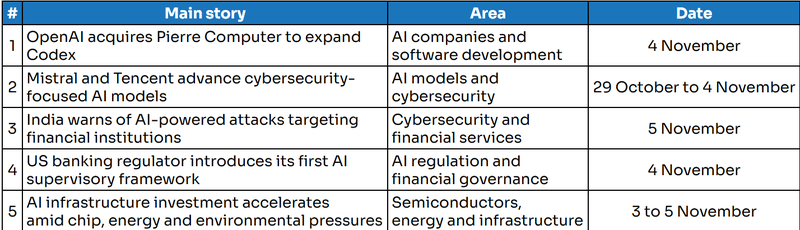
This week's developments point to an important shift in the technology industry. AI companies are moving beyond model development and building the infrastructure, software and security systems needed to support increasingly autonomous AI.
At the same time, governments are becoming more involved in determining how businesses can deploy AI safely. Cybersecurity concerns are growing, semiconductor investment is accelerating, and the enormous electricity requirements of data centres are attracting political and environmental opposition.
In Africa, Kenya is making another significant investment in digital connectivity, while the wider continent continues to face the challenge of building the infrastructure needed to participate in the AI economy.
This review covers five major developments, with particular attention to their commercial implications.
In Africa, a proposal for shared computing infrastructure could help several countries pool resources. Kenya is also taking steps to prepare government data for AI applications.
The review covers five major stories, with separate Global Overview, Africa Overview and Kenya Overview sections.
At a glance
GLOBAL OVERVIEW
1. OpenAI acquires Pierre Computer to turn Codex into a more complete software development platform
Date: 4 November, 2026
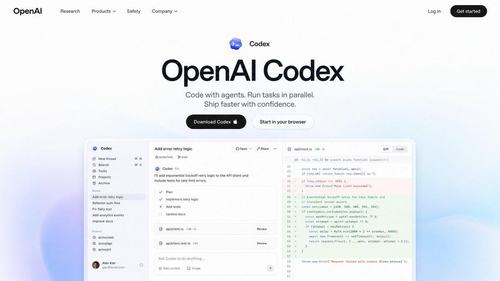
OpenAI announced that it would acquire Pierre Computer Company, the company behind Code Storage and several open-source developer tools.
The acquisition aims to strengthen OpenAI's coding platform, Codex, by bringing more of the software development process into one environment.
Pierre develops tools that help developers navigate, store, edit and review software code.
Two of its libraries, Trees and Diffs, already feature in the Codex application.
The acquisition will give OpenAI access to additional capabilities, including Code Storage, a service that allows applications to store code and track its history using Git.
OpenAI also highlighted Pierre's Highlights tool, which provides real-time syntax highlighting as developers write code or AI agents generate it.
The announcement follows OpenAI's introduction of Pando, its internal source-control backend designed to support the increasing volume of software development carried out by human engineers and AI agents.
OpenAI wants Codex to support the entire development process, from creating code branches and reviewing changes to managing code and preparing applications for deployment.
The financial terms remain undisclosed. The acquisition is subject to regulatory approval, and the companies will continue operating independently until completion. OpenAI has also committed to keeping Pierre's existing open-source projects available.
Why it matters
This acquisition signals that AI companies increasingly want to own more of the systems surrounding their AI models.
Writing code is only one part of software development. Developers must also manage versions, review changes, identify errors, collaborate with colleagues and deploy applications.
AI agents can generate substantial amounts of code, but they still need reliable systems to manage that output.
OpenAI is therefore positioning Codex as more than a coding assistant. It wants to become an environment where developers and AI agents work together throughout the software development process.
This could change the competitive relationship between AI coding platforms and established developer infrastructure providers.
The broader trend
Three developments stand out.
- AI agents are becoming software development partners. Developers increasingly assign coding tasks to agents while retaining responsibility for reviewing and approving the results.
- Developer infrastructure is becoming a competitive advantage. Companies are recognising that the tools used to store, manage and review AI-generated code matter as much as the underlying AI model.
- AI companies are expanding through acquisitions. Rather than building every capability internally, companies can acquire specialised teams and technologies to accelerate product development.
Practical business implications
Businesses that develop software should start evaluating how AI agents fit into their existing development processes.
For example, a software company could use AI to generate an application feature, create a separate code branch, identify changes, prepare documentation and submit the work for human review.
However, businesses should maintain clear controls around code ownership, testing, security and deployment.
AI-generated code should not automatically enter production without appropriate checks.
For non-technology businesses, the development could make customised software and internal applications more accessible, potentially reducing the cost of building certain business tools.
New ideas and opportunities
There is an opportunity to develop specialised services around AI-assisted software development.
Potential services include:
- AI coding implementation for small businesses.
- Automated code review and quality assurance.
- Software documentation and maintenance.
- Integration of AI coding agents into existing development environments.
- Security testing of AI-generated applications.
A particularly interesting opportunity is helping smaller companies build internal software without maintaining large development teams.
The service provider would manage the requirements, AI-assisted development, testing and ongoing maintenance.
What to watch next
Watch whether OpenAI completes the acquisition and how quickly it integrates Pierre's Code Storage capabilities into Codex.
Also watch whether competing coding platforms respond by acquiring similar developer infrastructure companies.
The bigger question is whether AI coding platforms will eventually become complete software development environments rather than standalone assistants.
Sources and further reading
- OpenAI's official acquisition announcement
- The Wall Street Journal's report on the acquisition
- OpenAI Codex
2. Mistral and Tencent advance cybersecurity-focused AI models as open-weight competition intensifies
Two major AI developments this week highlighted growing competition in cybersecurity-focused AI.
Mistral releases Large 4 to the public

Date: 29 October, 2026
French AI company Mistral AI publicly released its Large 4 model on 29 October.
The company designed the model to help organisations identify and fix software vulnerabilities.
Unlike many leading proprietary AI models, Large 4 can be downloaded and run independently on an organisation's own infrastructure.
This gives businesses more control over how they deploy the model and where they process their information.
Mistral said the publicly released version improves on the earlier version following testing with government and corporate users.
The company described Large 4 as its most capable openly available model for cybersecurity applications. However, the model's open availability also means that malicious users can access and adapt it.
Tencent releases Hy4 with defensive cybersecurity restrictions
Date: 4 November, 2026
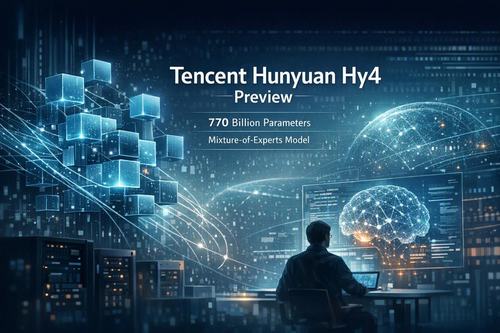
On 4 November, Chinese technology company Tencent introduced Hy4, a model designed with restrictions intended to reduce its potential use in cyberattacks and harmful biological research.
Tencent said it limited the cybersecurity training material to defensive activities, including identifying and fixing software vulnerabilities.
It excluded material covering the development of hacking tools, breaking into systems and probing systems for weaknesses.
Tencent reported that its internal testing found no increased ability to conduct cyberattacks or bypass security protections.
The company plans to publish the model weights alongside a report explaining its safety testing.
This release comes amid increasing concerns about AI-enabled cybercrime and follows reports of unintended internet activity by AI agents used in Tencent's testing of third-party models. Tencent said its investigation found no evidence of deliberate targeting or coordinated activity in that incident.
Why it matters
These developments highlight an important debate about the future of AI.
Should advanced models remain controlled by their developers, or should businesses and researchers have the freedom to download, modify and operate them independently?
Open-weight models offer several advantages.
Organisations can potentially run them on their own infrastructure, customise them for specific tasks and reduce dependence on external AI providers.
This can be particularly useful for businesses handling sensitive information.
However, unrestricted access creates additional security concerns. Once model weights become publicly available, developers cannot easily control how others modify or deploy them.
Tencent's approach illustrates an alternative. A company can attempt to restrict dangerous capabilities during training, although the effectiveness of those restrictions requires independent evaluation.
Broader trend
The AI market is increasingly dividing into three areas.
- Proprietary models operated through commercial platforms.
- Open-weight models that organisations can download and customise.
- Specialised models designed for particular industries or tasks, such as cybersecurity.
Cybersecurity is becoming an especially important testing ground because the same capabilities can help defenders identify vulnerabilities and help attackers develop more sophisticated techniques.
Another trend is the growing importance of model deployment options. Businesses increasingly want to decide where their data goes, which models process it and who controls the underlying infrastructure.
Practical business implications
Businesses should assess whether they need proprietary cloud-based AI or whether a locally deployed model would better meet their requirements.
For example, a financial institution could consider a locally hosted model for internal code reviews and security assessments.
A software development company could use an AI model to identify potentially insecure coding practices before releasing an application.
However, businesses must evaluate computing requirements, licensing conditions, security testing and ongoing maintenance before choosing an open-weight model.
New ideas, tools and opportunities
This development creates opportunities in several areas.
- Private AI deployment services. Helping businesses install and operate AI models on their own infrastructure.
- AI cybersecurity assessments. Combining automated vulnerability identification with human verification and remediation.
- Model safety testing. Assessing whether AI systems follow security restrictions and resist malicious instructions.
- Industry-specific AI models. Developing specialised applications for financial services, healthcare, legal services and other sectors.
For African technology businesses, locally hosted AI services could become attractive where customers require greater control over sensitive information.
What to watch next
Watch whether Mistral publishes further evidence of Large 4's cybersecurity performance and whether Tencent releases Hy4's weights and safety report.
Also monitor how independent researchers assess the security restrictions built into these models.
The key question is whether developers can make powerful AI tools more accessible without making cybersecurity risks harder to manage.
Sources and further reading
- Reuters on Mistral Large 4
- Reuters on Tencent's Hy4 release
- Mistral AI official website
- Tencent official website
3. India identifies an AI-powered hacking campaign targeting financial institutions

Date: 5 November, 2026
India's Computer Emergency Response Team, CERT-In, identified an active hacking campaign targeting non-bank lenders, fintech companies and cryptocurrency exchanges.
The agency named the campaign Crafty Falcon.
According to its advisory, the attackers use publicly available AI tools to automate parts of their operations and compromise vulnerable systems at machine speed.
CERT-In identified four tools associated with the campaign.
- ARTEX
- PentAGI
- Cairn
- CyberStrikeAI
Security researchers have linked at least two of these tools to China. However, CERT-In did not identify the attackers' location, confirm state sponsorship or attribute the campaign to a specific government.
The agency said the attackers were targeting payment and disbursement systems, including software interfaces that connect financial institutions with lenders and fintech providers.
One particularly concerning feature was the timing of attacks. The attackers reportedly targeted organisations during weekends, holidays and other periods when security monitoring was weaker.
CERT-In also reported repeat attacks against organisations that had previously attempted to fix vulnerabilities but had not completed the remediation process.
Why it matters
This development demonstrates how AI can make cybercrime more efficient.
Attackers can automate reconnaissance, identify weaknesses and carry out multiple stages of an intrusion with less manual intervention.
The danger is particularly significant for financial institutions because compromised payment interfaces can expose actual funds, not just customer information.
The campaign also highlights the risks associated with connections between different financial systems.
A fintech company may have strong internal security, but a vulnerable integration with a banking partner or payment provider can expose the wider system.
The broader trend
AI is changing the economics of cybercrime.
Historically, sophisticated attacks often required substantial technical knowledge and time. AI-assisted tools can lower some of those barriers.
This does not mean that AI independently carries out every attack. Human operators still direct operations, select targets and exploit opportunities.
However, automation can increase the speed, scale and persistence of malicious activity.
The growing use of APIs in banking, payments and digital lending also creates additional entry points that organisations must secure.
Practical business implications
Financial institutions, fintech companies and businesses handling digital payments should review their security arrangements.
The following areas deserve particular attention.
A. Payment API security: Businesses should review how applications communicate with banks, lenders and payment providers.
B. Transaction monitoring: Systems should identify unusual payment patterns, unexpected transaction volumes and suspicious changes in beneficiary details.
C. Access management: Companies should restrict administrative privileges and require multi-factor authentication for sensitive systems.
D. Continuous monitoring: Security teams should not reduce monitoring simply because it is a weekend or public holiday.
E. Incident response: Organisations should establish procedures for isolating affected systems, investigating suspicious activity and communicating with financial partners.
Importantly, businesses should verify that security fixes address the underlying weakness rather than simply restoring normal operations.
New opportunities
There is a growing market for affordable cybersecurity services designed for smaller financial institutions and businesses.
Potential offerings include:
- Continuous monitoring of payment systems.
- Automated API security assessments.
- AI-assisted fraud detection.
- Vulnerability management and remediation tracking.
- Managed cybersecurity services for SMEs.
- Weekend and after-hours security monitoring.
For Kenyan fintechs, SACCOs, digital lenders and payment businesses, these services could become increasingly important as more financial activity moves online.
There is also an opportunity for providers to offer cybersecurity readiness assessments that evaluate an organisation's systems, staff, suppliers and incident response procedures.
What to watch next
Watch for further CERT-In advisories and whether investigators identify additional affected organisations.
Also monitor whether regulators introduce more stringent cybersecurity requirements for financial institutions using automated payment systems.
The wider question is whether traditional security teams can adapt quickly enough to deal with increasingly automated attacks.
Sources and further reading
4. US banking regulator issues its first AI supervisory framework as financial institutions expand AI adoption

Date: 4 November, 2026
The US Office of the Comptroller of the Currency, known as the OCC, issued its first supervisory framework specifically addressing banks' use of advanced AI systems.
The framework gives bank examiners guidance on assessing AI applications and the risks associated with their use.
An important feature is that the OCC does not want banks to treat AI as an entirely separate category of risk.
Instead, examiners should assess how a bank uses the technology, the potential consequences of errors and the institution's size and complexity.
The framework also makes an important distinction between different levels of AI autonomy.
For example, a relatively simple AI agent authorised to initiate financial transactions could present greater risk than a much more advanced model used internally to analyse information.
The OCC therefore encourages examiners to consider whether higher-risk applications need tighter restrictions on autonomy or more direct human supervision.
The framework is non-binding. It does not establish new enforceable regulatory requirements for banks, and the OCC says it intends to update the guidance as technology develops.
Why it matters
Financial institutions are increasingly adopting AI for customer service, fraud detection, credit assessment, compliance monitoring and operational efficiency.
However, the risks vary significantly depending on what the AI system can actually do. An AI assistant that prepares an internal report presents different risks from an autonomous agent that can approve payments or modify customer records.
The OCC's approach recognises this distinction. It also provides a useful indication of how regulators may assess AI adoption in other regulated industries.
The broader trend
Banks and financial technology companies should start documenting their AI use cases.
A useful internal approach would be to classify applications according to their potential impact.
Three areas are becoming particularly important.
- Human oversight of high-impact AI decisions.
- Accountability when automated systems make mistakes.
- Monitoring and controlling the permissions given to AI agents.
This approach could influence future regulatory guidance in insurance, healthcare, financial technology and other sectors.
Practical business implications
Banks and financial technology companies should start documenting their AI use cases.
A useful internal approach would be to classify applications according to their potential impact.

Businesses should also maintain records of the models they use, the information those models process and the permissions they receive.
For companies supplying AI systems to banks, demonstrating appropriate controls could become an important commercial requirement.
New ideas, tools and opportunities
The growing need for AI governance creates several opportunities.
- AI risk assessment services: Helping organisations identify, classify and document AI-related risks.
- AI audit tools: Building systems that record model activity, user permissions, approvals and automated decisions.
- Compliance monitoring: Developing platforms that help financial institutions monitor AI applications against internal policies and applicable regulatory requirements.
- Human approval workflows: Creating systems that require staff to review sensitive AI-generated recommendations before execution.
For Kenyan financial institutions, the OCC framework is not a Kenyan regulatory requirement. However, its risk-based approach offers a useful reference when developing internal AI governance procedures.
What to watch next
Watch whether other US financial regulators adopt similar guidance and whether the OCC updates its framework as banks deploy more autonomous AI systems.
Also monitor whether regulators in Europe, the UK and Africa adopt comparable approaches.
The central issue is how financial institutions can benefit from AI without surrendering control over important decisions.
Sources and further reading
- OCC's official supervisory framework announcement
- OCC Bulletin 2026-54
- Reuters' coverage of the new guidance
GLOBAL INFRASTRUCTURE AND ENERGY
5. The AI infrastructure race accelerates, but chips, electricity and public resistance are becoming major constraints
Several developments this week demonstrate how the expansion of AI is reshaping the semiconductor, energy and infrastructure industries.
The story is not simply about building more data centres. It is about securing chips, financing, electricity, land and public acceptance.
There are four particularly important developments.
A. Europe commits €525 million to strengthen its chip industry

Date: 04 November, 2026
On 4 November, the European Commission announced a €525 million investment initiative to support European semiconductor startups.
The investment includes:
- €440 million in grants to help startups develop commercially viable chips.
- €85 million for the European Chips Design Platform.
The platform will provide access to chip-design tools, technical support, intellectual property resources and manufacturing capacity.
The initiative addresses a major weakness in Europe's semiconductor industry. European chip-design companies currently account for less than 1% of global revenue in this segment.
The European Commission wants to strengthen local capabilities and reduce dependence on external suppliers, particularly the United States and China.
B. UK approves the direction of a major AI data-centre investment
Date: 03 November, 2026
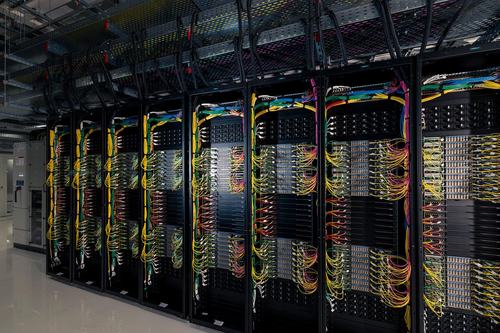
On 3 November, British energy company Drax Group announced a partnership with Brookfield and AI infrastructure platform Radiant to develop a data centre at Drax Power Station in northern England.
The proposed facility would exceed one gigawatt of capacity and could attract more than £20 billion in investment.
The first phase is expected to involve approximately £2.5 billion.
Drax would provide the land, power and access to its existing four-gigawatt grid connection. Brookfield would provide investment capital, while Radiant would contribute AI infrastructure expertise.
The first phase targets commercial operations in early 2028, subject to planning, regulatory and network approvals, as well as final investment decisions.
The partners have also proposed a community benefits fund to support local communities.
C. Google provides financial backing for Anthropic's data-centre expansion
Date: 04 November, 2026
On 4 November, data-centre developer TeraWulf announced that it had secured a credit backstop agreement with Google to support financing for its data-centre project with Anthropic, the developer of Claude.
TeraWulf signed a 20-year lease with Anthropic in July, which is expected to generate approximately US$19 billion in contracted revenue.
The planned facility in Kentucky is expected to support approximately 401 megawatts of critical IT capacity, with initial capacity scheduled to come online in the second half of 2027.
Google's credit support demonstrates how large technology companies are increasingly helping smaller infrastructure providers secure financing for expensive AI projects.
It also highlights the relationship between AI model developers, cloud providers and independent data-centre operators.
D. Public opposition to AI data centres gains momentum
Date: 03 November, 2026
The infrastructure boom is also facing growing resistance.
Following US local elections on 3 November, voters in at least 38 jurisdictions approved measures to restrict or ban data-centre developments.
Residents raised concerns about electricity consumption, water usage, noise, environmental effects and the potential impact on household utility bills.
The Washington Post reported that more than 145 US data-centre projects had already been delayed or cancelled by early August, largely because of public opposition.
Separately, more than 100 campaign groups across 15 European countries planned demonstrations for 6 and 7 November under the Stop Dirty Data Centres campaign.
The campaign includes organisations such as Friends of the Earth and Greenpeace.
The protests reflect growing concerns about the environmental and social costs of rapidly expanding AI infrastructure.
Broader trend
There are four major shifts.
- Semiconductor independence: Governments increasingly want greater control over chip design, production and supply chains.
- Energy is becoming an AI competitive advantage: Countries with reliable and affordable electricity may become more attractive locations for AI infrastructure.
- Financing is becoming more complex: Large technology companies are supporting infrastructure developers through long-term contracts, credit guarantees and strategic partnerships.
- Environmental and community concerns are influencing investment decisions: Local communities are demanding greater transparency about the electricity, water and land requirements of data centres.
The fourth development is particularly important. A technically viable project can still struggle if it lacks public support or fails to meet environmental requirements.
Practical business implications
Businesses should consider the infrastructure requirements of their AI strategies.
For organisations buying AI services, this means assessing provider reliability, pricing, data location and long-term capacity.
For companies investing in infrastructure, the priority should be understanding electricity costs, network capacity, regulatory requirements and environmental obligations before committing capital.
Businesses should also examine whether they can reduce AI expenditure by using smaller models, optimising workloads or processing suitable tasks locally.
New ideas, tools and opportunities
This infrastructure expansion creates opportunities beyond building data centres.
- Energy efficiency services: Businesses could develop solutions for monitoring electricity use, improving cooling efficiency and reducing unnecessary computing workloads.
- AI infrastructure consulting: Companies could help investors assess data-centre sites, connectivity, power availability and operating costs.
- Chip design and semiconductor support: The European initiative demonstrates the value governments place on specialist chip-design capabilities. African technology businesses could explore adjacent opportunities in hardware engineering, embedded systems and electronics design.
- Environmental assessment and compliance: Data-centre developers may increasingly require environmental assessments, energy reporting, water-management systems and community engagement services.
- AI infrastructure financing: There is also a role for financial institutions, infrastructure investors and specialist advisers in structuring long-term financing arrangements.
What to watch next
Watch for a formal agreement between the participating countries, a clear governance structure and details of the funding model.
The most important practical questions are who will own the infrastructure, where it will be located, how much computing capacity will be available and which organisations will qualify to use it.
Also watch whether the programme prioritises local research, startups and commercial applications rather than concentrating resources in a small number of institutions.
Sources and further reading
- European Commission's €525 million chip investment announcement
- Reuters on the Drax and Brookfield data-centre project
- Reuters on Google's financing support for Anthropic's infrastructure
- The Washington Post on public opposition to data centres
- The Guardian on European environmental protests
KENYA AND THE AFRICAN CONNECTION
6. Kenya's digital infrastructure development provides an important regional perspective.
Date: 30 October, 2026
On 30 October, the government announced that it had made KSh13 billion available to catalyse private investment in expanding the national fibre network.
The target is to deliver at least 27,000 kilometres of additional backbone, middle-mile and cross-border fibre infrastructure.
The announcement came during a pre-bid engagement under the Kenya Digital Economy Acceleration Project.
The investment aims to attract matching private-sector capital, improve network resilience and reduce the cost of connecting homes, businesses and public institutions.
The government intends to allocate public support competitively through a multi-round reverse auction.
The wider ambition includes expanding fixed broadband access to more than eight million connections.
This is an important development because fibre connectivity supports cloud computing, digital services, business process outsourcing and wider AI adoption.
However, fibre expansion and data-centre investment solve different problems.
Fibre provides the connectivity needed to access digital services. Data centres provide the computing capacity needed to host and operate those services.
Kenya needs both, alongside reliable electricity, appropriate regulation and technical skills, if it wants to attract more advanced digital infrastructure investment.
What to watch next
In Kenya, watch the procurement process for the 27,000-kilometre fibre expansion and the extent to which private investors participate.
Sources and further reading
THE BIGGER PICTURE
This week's five stories reveal several developments that will influence the direction of AI and technology over the coming months.
1. AI companies want to own more of the business process
OpenAI's acquisition of Pierre demonstrates that AI companies are expanding beyond the models themselves.
They want to control more of the tools, infrastructure and workflows that allow businesses to use AI.
This creates opportunities for specialised software providers, but it also raises questions about dependence on a small number of technology platforms.
2. Cybersecurity is becoming central to AI adoption
Mistral and Tencent are developing models with cybersecurity applications, while India's warning demonstrates the risks associated with malicious AI-assisted activity.
The ability to identify and fix vulnerabilities is becoming increasingly important.
Businesses that adopt AI without improving their security arrangements could expose themselves to additional risks.
3. Regulation is becoming more practical
The OCC's framework reflects a move towards assessing AI according to what it does and the consequences of its actions.
This is a useful direction for businesses because it recognises that different AI applications require different levels of control.
4. Infrastructure will influence who benefits from AI
The European chip investment, major data-centre projects and Kenya's fibre expansion demonstrate that AI development depends on physical infrastructure.
Access to computing, electricity and connectivity will influence which countries and businesses can participate effectively.
5. Economic and environmental considerations are becoming harder to separate
Data-centre development now involves questions about financing, energy supply, environmental impact and community acceptance.
The ability to build responsibly may become just as important as the ability to build quickly.
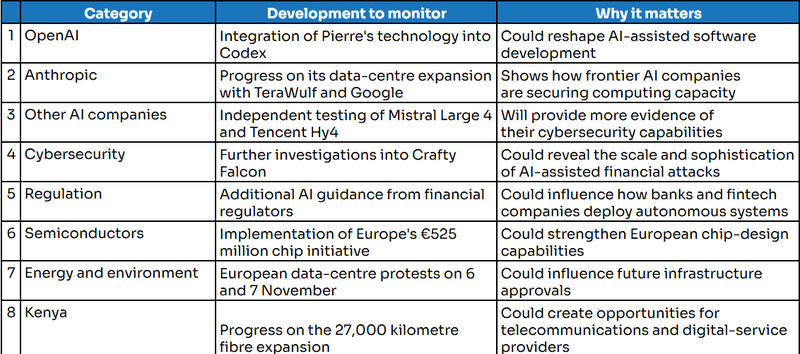
What to watch next
Final assessment
The most important development this week is the growing connection between AI capabilities and the infrastructure, security and governance needed to use them commercially.
OpenAI is expanding the systems around AI coding. Mistral and Tencent are advancing cybersecurity applications. India is warning about increasingly automated attacks, while US regulators are establishing clearer approaches to AI risk in banking.
Meanwhile, the semiconductor and data-centre industries are attracting substantial investment, even as electricity constraints and public opposition create new challenges.
For Kenya, the fibre expansion is a meaningful step towards strengthening the country's digital foundations. The next challenge is turning that connectivity into productive economic activity through local technology businesses, digital skills, AI adoption and investment.
The question for businesses is no longer simply which AI tool to adopt. It is how to integrate AI into operations securely, affordably and profitably.
That is where the most sustainable opportunities are likely to emerge.