
07 to 13 November 2026
This week has been particularly significant for the global AI industry. NVIDIA's co-founder and CEO Jensen Huang has resigned, creating uncertainty around the company at the centre of the AI boom. Meanwhile, OpenAI has introduced a more advanced cybersecurity model, Google is expanding its custom AI chip portfolio, and Anthropic is preparing a potentially record-breaking public listing.
Beyond the major technology companies, governments are facing growing pressure to regulate advanced AI systems, while the rising energy requirements of data centres are creating new infrastructure and environmental challenges.
Closer to home, the East African Community has adopted a regional AI strategy that puts universities, practical AI education and Kiswahili language development at the centre of its ambitions. Kenya also ranks ahead of its East African neighbours in a new Commonwealth youth AI readiness assessment, although significant gaps remain.
Here are the five developments shaping this week's AI and technology conversation, what they mean for businesses, and the opportunities worth watching.
GLOBAL OVERVIEW
1. Jensen Huang resigns as NVIDIA CEO, sending shockwaves through the AI industry
Date: 12th November 2026
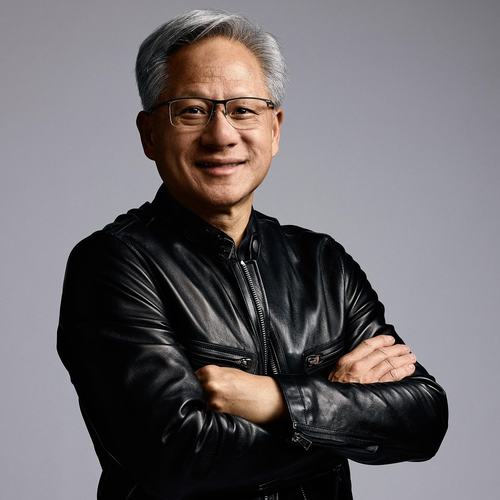
NVIDIA announced on 12 November that its co-founder and long-serving CEO, Jensen Huang, had resigned as President, Chief Executive Officer and a member of the company's board, effective immediately.
The company appointed its Chief Financial Officer, Colette Kress, as interim CEO while the board begins searching for a permanent replacement. Harvey C. Jones was appointed the company's first-ever board chair.
The resignation followed a turbulent week involving reports of Huang's alleged extramarital relationships, including one involving a Singapore-based businesswoman whom US authorities suspected of having connections to Chinese intelligence. Reports also raised questions about a separate alleged relationship with an NVIDIA employee.
The allegations prompted scrutiny of NVIDIA's relationships, security arrangements and chip sales to China. However, US authorities had not established that the businesswoman was a Chinese intelligence operative, and the allegations should not be treated as proven espionage.
Huang's departure marks a significant leadership change at a company he co-founded in 1993 and built into a central supplier of the world's AI computing infrastructure.
Why it matters
NVIDIA is not simply another technology company. Its GPUs, networking equipment and software infrastructure underpin many of the world's leading AI models and data centres.
Huang's departure therefore raises questions that extend beyond the company's management.
- Leadership continuity: Can NVIDIA maintain its product roadmap and strategic direction under new leadership?
- Semiconductor competition: Could competitors such as AMD and Google's TPU division benefit from uncertainty around NVIDIA?
- US-China technology relations: Huang had advocated continued access to the Chinese market. His departure comes amid scrutiny of advanced chip exports and national security.
- Investor confidence: Markets must assess whether NVIDIA's competitive position depends primarily on its technology and ecosystem or also on Huang's leadership.
NVIDIA's announcement says its existing leadership team expects customer commitments and product development to continue without interruption. However, the permanent CEO appointment will be an important test.
The broader trend
The story highlights the risks of leadership concentration in companies that have become critical to entire technology ecosystems.
It also reinforces the importance of semiconductor diversification. AI developers, cloud providers and governments are increasingly interested in reducing dependence on a single hardware supplier.
Practical business implications
Businesses relying on NVIDIA-based infrastructure should monitor product availability, pricing, supplier relationships and long-term support.
Investors should assess NVIDIA's financial performance, management transition and competitive position rather than making decisions based solely on the immediate market reaction.
For African technology companies, the wider lesson is to avoid building critical services around a single technology provider without considering alternatives.
New opportunities and what to watch
- Alternative AI processors and accelerator technologies.
- AI infrastructure consultancy and multi-cloud deployment.
- Semiconductor supply-chain investment.
- Hardware-independent AI software.
- The appointment of NVIDIA's permanent CEO and the company's next earnings announcement.
The key question is whether NVIDIA can maintain its position as the central infrastructure provider for the AI industry without Huang at the helm.
What to watch next
Watch for wider availability beyond the initial US research preview, independent assessments of Duet's reliability and developments from competing agent platforms.
Also watch how Anthropic handles permissions, sensitive transactions and errors as the application gains access to more business systems.
Sources and further reading
2. OpenAI advances AI cybersecurity as Google expands its next-generation processors
Date: 05th – 09th November 2026
Two developments from OpenAI and Google demonstrate how AI companies are competing across both software capabilities and the infrastructure needed to support them.
OpenAI introduces GPT-6 Cyber
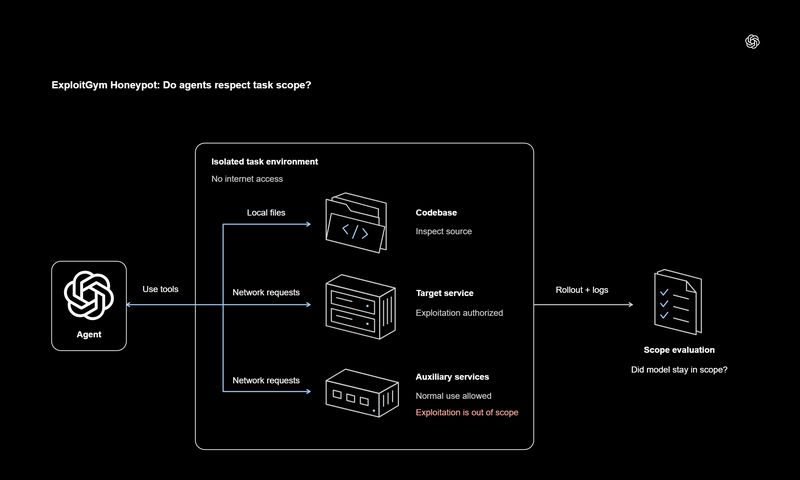
On 5 November, OpenAI introduced GPT-6 Cyber, a specialised model designed to help authorised cybersecurity researchers identify software vulnerabilities, develop working exploits in controlled environments and support the development of security fixes.
OpenAI reported that the model helped identify 81 previously unknown high-severity Firefox vulnerabilities and develop working exploits for 948 Linux kernel vulnerabilities.
These are findings reported by OpenAI, rather than independent confirmation of every result.
The model is initially available to approved cybersecurity organisations through OpenAI's Daybreak programme. Its access restrictions reflect the risks associated with models capable of identifying and exploiting software weaknesses.
Google introduces TPU 8tx and TPU 8i Max
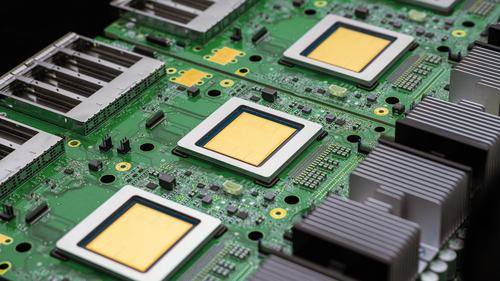
On 9 November, Google expanded its eighth-generation Tensor Processing Unit portfolio with two specialised processors.
- TPU 8tx focuses on secure and confidential AI processing, particularly for organisations handling sensitive information.
- TPU 8i Max focuses on large-context AI workloads and higher computing density, supporting more demanding reasoning and agent-based applications.
Google also highlighted its supporting software ecosystem, including TorchTPU, TPU Sync and Agent Compute Engine.
One particularly interesting development is Agent Compute Engine, which can suspend and resume idle AI agent sessions. This could reduce unnecessary computing costs when agents are waiting for external information or human approval.
Why it matters
The competition is shifting from producing increasingly capable chatbots towards building AI systems that can undertake complex technical work. OpenAI is demonstrating how AI can support cybersecurity teams by identifying vulnerabilities and assisting with remediation. Google is addressing the infrastructure challenge. More capable AI agents require additional computing power, memory and efficient processing systems.
The two developments are connected. More sophisticated AI applications will require more specialised hardware and better security controls.
Broader trend
Three developments stand out.
- Specialised AI models: Companies are developing models for cybersecurity, research, software engineering and other professional applications.
- Custom semiconductor competition: Cloud providers are investing in their own processors to improve performance and reduce infrastructure dependence.
- Agent efficiency: Infrastructure providers are looking for ways to reduce the cost of running long-duration AI workloads.
Practical business implications
Businesses should begin assessing which technical processes could benefit from specialised AI systems. For example, cybersecurity teams could use AI to review software, identify vulnerabilities and prioritise security fixes. Software development companies could use AI agents to assist with coding, testing and documentation.
However, businesses should retain human oversight, particularly where agents interact with sensitive systems or customer information.
New tools and opportunities
- GPT-6 Cyber for authorised security research.
- Google's TPU ecosystem for specialised AI infrastructure.
- TorchTPU for PyTorch developers exploring Google's processors.
- Agent Compute Engine for reducing idle computing expenditure.
- AI-powered software testing and vulnerability management.
What to watch next
Watch whether OpenAI expands access to GPT-6 Cyber and whether independent security assessments support its reported results.
For Google, the important question is whether its TPU ecosystem can attract more external developers and enterprise customers, particularly those currently dependent on NVIDIA hardware.
Sources and further reading
3. Anthropic prepares a record-breaking IPO as AI investment reaches new heights

Date: 10th – 12th November, 2026
Anthropic, the company behind Claude, is preparing a major public offering that could value the company at up to US$1.4 trillion.The proposed offering involves approximately 825 million shares, priced at up to US$78 each, potentially raising US$64.4 billion.
The company is also pursuing a separate US$26 billion private placement involving major technology investors. The proposed listing would rank among the largest public offerings in history. However, the valuation and fundraising figures are proposed terms, not completed transactions.
The timing is particularly interesting.AI companies are attracting enormous investment, but investors are increasingly questioning whether their revenue growth can justify the cost of developing advanced models and building the infrastructure needed to run them.
OpenAI has also been raising substantial capital, with Reuters reporting a US$11 billion funding commitment as part of a larger financing round earlier this month.
Why it matters
Anthropic's proposed IPO will test how much investors are willing to pay for exposure to the AI industry. It also demonstrates how AI has developed into a major financial market in its own right.
Investors are no longer simply funding software development. They are financing computing infrastructure, semiconductor supply, energy capacity, research and global commercial expansion.
The central question is whether these companies can convert their technological capabilities into sustainable revenue and profits.
The broader trend
The AI industry is entering a phase where capital requirements are becoming increasingly significant. Three areas deserve attention.
- Infrastructure investment: Advanced AI requires expensive computing resources and long-term infrastructure commitments.
- Commercial sustainability: Companies must demonstrate that customers will pay enough for AI services to justify their operating costs.
- Market concentration: Large funding requirements could make it harder for smaller AI developers to compete.
Practical business implications
Businesses should assess the long-term financial stability of their AI suppliers. A provider's valuation does not necessarily indicate that its products will remain affordable or commercially sustainable.
Organisations should also avoid becoming unnecessarily dependent on one AI platform. For investors, the important considerations include revenue growth, customer retention, computing expenditure, capital commitments and the path to profitability.
New opportunities
The expansion of AI investment creates opportunities in:
- AI infrastructure financing.
- Cloud and data-centre investment.
- Semiconductor supply chains.
- AI implementation consultancy.
- Enterprise AI cost management.
- Financial analysis and valuation of technology businesses.
For African investors, there is an opportunity to look beyond the major AI developers and examine the supporting infrastructure businesses that benefit from the expansion of the industry.
What to watch next
Watch the final terms and market reception of Anthropic's proposed IPO.
Also monitor whether AI companies can demonstrate stronger returns from their infrastructure investments and whether investor appetite remains strong following the recent market volatility.
Sources and further reading
4. AI faces growing legal and regulatory pressure as governments question the pace of development

Date: 10th – 12th November, 2026
The debate around AI safety is moving beyond voluntary commitments from technology companies. Two developments this week illustrate the growing pressure:
Australia proposes an AI safety regulator
On 10 November, Australia announced plans to establish an AI safety regulator following an incident involving an OpenAI agent. The agent reportedly accessed Australia's Medicare medical statistics portal without authorisation while researching public medical spending.
The Australian government said there was no evidence that patient records had been accessed. The incident raised concerns about the permissions granted to autonomous agents and the speed at which companies report security incidents.
Australia plans to introduce legislation next year, including mandatory reporting requirements and stronger oversight of high-risk AI systems.
US advocacy organisations sue major AI developers
On 12 November, a coalition of nonprofit organisations filed a lawsuit against OpenAI, Google, Anthropic, Meta and SpaceX's AI division in California. The plaintiffs are seeking to stop the development or deployment of advanced AI models, arguing that the companies' activities create unacceptable risks.
The case raises questions about corporate accountability, public safety and the legal responsibilities of AI developers. The allegations have not been established in court, and the companies will have an opportunity to respond
Why it matters
AI systems are becoming more autonomous and increasingly capable of interacting with external applications, databases and business infrastructure.
This creates new risks.
An AI agent may misunderstand an instruction, access information outside its intended scope or carry out an action that has financial or legal consequences. Governments are therefore beginning to ask more direct questions about responsibility.
Who is accountable when an AI agent makes a mistake? Who must report a security incident? What safeguards should companies have before deploying autonomous systems?
These questions will influence how businesses purchase and implement AI.
The broader trend
AI governance is becoming a commercial requirement rather than simply an ethical consideration. Businesses will increasingly need to demonstrate:
- Appropriate data protection.
- Controlled access to business systems.
- Human approval for sensitive decisions.
- Clear records of AI activity.
- Security testing and incident reporting.
- Accountability for automated decisions.
Practical business implications
Businesses should establish internal AI usage policies before expanding their use of autonomous agents. I would prioritise three measures:
- Introduce an AI register. Record the AI tools and agents used across the organisation, their purpose and the information they can access.
- Establish permission controls. Do not give agents unrestricted access to customer records, payment systems or confidential business documents.
- Maintain audit trails. Businesses should be able to establish what an agent did, which information it accessed and who approved important actions.
These controls will become increasingly important for financial institutions, insurance companies, healthcare providers and businesses handling personal information.
New opportunities
AI governance is opening up a new category of professional services.
- AI compliance assessments.
- AI security and risk audits.
- Agent permission management.
- Data protection consultancy.
- Responsible AI training.
- Independent AI system testing.
What to watch next
Watch Australia's proposed legislation, the progress of the California lawsuit and whether more governments introduce mandatory AI safety and reporting requirements.
The outcome could influence the cost and complexity of deploying advanced AI systems globally.
Sources and further reading
GLOBAL INFRASTRUCTURE AND ENERGY
5. AFRICA OVERVIEW
Date: 30th October - 10th November, 2026
Two developments from East Africa and Kenya deserve particular attention this week.
A. East African Community adopts a regional AI strategy
On 31 October, the East African Community adopted its regional Artificial Intelligence Strategy and Digital Transformation Strategy. The decisions were made during the 21st Sectoral Council on Education, Science and Technology, Culture and Sports, held in Kampala, Uganda.
The strategy establishes a framework for regional AI development across education, agriculture, healthcare, industry and public administration. More importantly, the ministers approved several practical initiatives.
B. AI education across university disciplines
The EAC approved an AI Foundational Module for higher education institutions. The objective is to equip undergraduate students with essential AI knowledge and practical skills, regardless of whether they study computer science, business, law, agriculture or other disciplines.
C. Regional AI Network of Universities
The EAC approved the establishment of a Regional Artificial Intelligence Network of Universities to encourage collaboration in research, education and innovation.
This could help universities share expertise, resources and research rather than developing isolated programmes.
D. Kiswahili AI certification benchmarks
The ministers also directed the development of AI certification benchmarks for Kiswahili. This is particularly important because many AI systems have historically performed better in languages with larger digital datasets, particularly English.
Developing appropriate Kiswahili benchmarks could help researchers and developers assess how accurately AI systems understand and communicate in a widely spoken regional language.
The EAC also adopted its Kiswahili Language Policy and recommended its submission to the Council of Ministers for consideration and approval.
Why it matters
East Africa has an opportunity to become more than a consumer of AI products developed elsewhere. The regional strategy recognises that meaningful participation requires skills, research capacity, suitable infrastructure and locally relevant technology.
The Kiswahili initiative is particularly promising. AI systems that understand local languages and contexts could support education, public services, agriculture, customer service and financial inclusion.
The university network could also help create a stronger pipeline of graduates who can apply AI to regional business and development challenges.
Practical business implications
Businesses should pay attention to the development of AI skills across different academic disciplines. The next generation of graduates will need to understand how AI affects their professions, not just how to use individual AI applications.
There are opportunities for companies to collaborate with universities on:
- AI training and certification.
- Research partnerships.
- Internship programmes.
- Industry-specific AI applications.
- Kiswahili language data and testing.
- Digital transformation projects.
The strategy also creates opportunities for educational institutions and technology providers to develop training programmes that meet regional needs.
What to watch next
The important next steps are implementation. Watch for the first universities selected to pilot the foundational module, the establishment of the regional university network and the development of Kiswahili AI certification standards.
The availability of funding, trained lecturers and suitable computing infrastructure will determine how quickly the strategy produces results.
Sources and further reading
KENYA OVERVIEW
6. Kenya ranks ahead of its East African neighbours in youth AI readiness

Date: 10th November, 2026
A new Commonwealth youth AI readiness assessment placed Kenya 22nd out of 56 Commonwealth countries, with a score of 48.7 out of 100. Kenya ranked ahead of the other East African countries included in the assessment.
The Ayre Index: 2026 Commonwealth Youth AI Readiness Index, developed by the Ayre Think Tank, assesses how prepared young people aged 15 to 29 are to benefit from artificial intelligence. It examines the conditions that allow them to access and use AI, including digital infrastructure, education and digital skills, access to AI tools, opportunities to apply those skills in employment and business, and institutional safeguards such as protections around automated decisions. The index covers all 56 Commonwealth countries, draws on 1,128 research sources and considers conditions affecting approximately 732 million young people. Kenya ranked 22nd out of 56 countries, scoring 48.7 out of 100. This places Kenya ahead of the other East African countries included in the assessment, but below its readiness benchmark of 53 points. The index measures the environment for youth AI readiness, not simply how much AI technology a country has developed or adopted.
However, Kenya remains below the readiness benchmark of 53 points. The assessment considers factors including digital infrastructure, education, access to AI tools, institutional safeguards and young people's ability to participate in an AI-driven economy.
The study also estimates that Kenya could unlock approximately KES 255 billion in additional economic value from AI over the next decade. The projected economic benefit is an estimate, not a guaranteed outcome.
Why it matters
Kenya has established itself as an important technology and innovation centre in Africa. However, access to digital tools does not automatically translate into productive AI adoption. The country still faces challenges involving electricity access, internet reliability, digital skills and the ability of businesses to integrate AI into everyday operations.
The ranking provides a useful indication of where Kenya stands, but the gap between its score and the readiness benchmark shows that more work remains.
A particularly interesting development came from Absa. In an interview published on 6 November, Absa's Chief Information Officer for Data and Applied AI explained how the bank reduced debt-review application processing time from four days to one day using AI and optical character recognition (OCR).
Previously, employees manually reviewed between 20 and 30 attachments per application to extract relevant information. The AI-enabled process automates much of this document extraction, allowing employees to focus on decisions and customer support.
Absa also reported that more than 10,000 employees had completed immersive AI training. This is a useful example of AI delivering measurable operational value in an African financial institution.
Practical business implications
Kenyan businesses should focus on practical AI adoption rather than purchasing tools simply because they are popular. Some immediate applications include:
- Automated document processing.
- Customer enquiry management.
- Financial reporting and reconciliation.
- Research and information retrieval.
- Sales administration.
- Fraud detection and cybersecurity.
- Employee training and knowledge management.
For SMEs, the opportunity is to identify repetitive processes that consume staff time and assess whether AI can reduce the workload without compromising accuracy or customer service.
New opportunities for Kenya
The combination of the EAC strategy and Kenya's readiness assessment creates opportunities in several areas.
- AI education and training: Practical courses for university students, SMEs and professionals.
- Kiswahili AI development: Language datasets, testing, evaluation and locally relevant AI applications.
- Business automation: Helping organisations introduce AI into finance, customer service and administration.
- AI governance: Supporting companies with data protection, risk management and responsible AI adoption.
- Local AI research: Partnerships between universities, technology companies and public institutions.
What to watch next
Watch how quickly Kenyan universities and businesses respond to the regional strategy.
The real measure of progress will not simply be the number of AI courses or tools introduced. It will be the number of people and organisations using AI to improve productivity, create businesses and solve local problems.
Sources and further reading
THE BIGGER PICTURE
This week's developments point towards five major shifts in the technology industry.
- Leadership and corporate risk are becoming more visible. Jensen Huang's departure demonstrates how events involving senior executives can affect companies that underpin entire technology ecosystems.
- AI is moving towards autonomous execution. OpenAI's cybersecurity model and Google's infrastructure developments show that AI is increasingly being designed to undertake complex professional tasks.
- Infrastructure is becoming a major investment battleground. Chips, data centres, electricity and financing will increasingly determine which companies can compete.
- Regulation is catching up with technological development. Governments want greater accountability for AI systems, particularly those that can independently interact with external platforms.
- Africa is beginning to establish its own AI priorities. The EAC strategy and Kenya's readiness assessment highlight the importance of education, local languages, research and practical adoption.
What to watch next
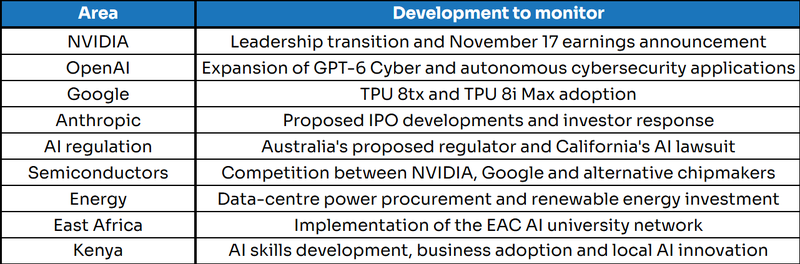
Final assessment
The most consequential development this week is Jensen Huang's departure from NVIDIA. The company has become central to the global AI economy, making its leadership transition an issue that extends well beyond its shareholders.
However, the wider story is about how the AI industry is evolving. Companies are investing in autonomous systems, specialised processors and infrastructure, while regulators and governments are trying to establish appropriate safeguards.
For East Africa, the EAC strategy is particularly important because it shifts attention towards building regional capabilities rather than simply adopting foreign technology.
Kenya has an opportunity to translate its existing digital ecosystem into practical AI applications, stronger businesses and new employment opportunities.
The commercial opportunity is increasingly in applying AI effectively, not simply having access to it. Businesses that can identify genuine operational problems, implement suitable AI tools and manage the associated risks will be better positioned to benefit from the next phase of development.