
Weekly AI and Technology Review
19 to 25 September 2026
AI moved further into everyday work this week. Companies are giving AI systems more control over software, security and personal tasks. At the same time, businesses are building new defences against AI powered attacks.
Africa also continued to develop its own AI capacity. Kenya stood out with several new partnerships that could influence how the country develops skills, public services and local AI capability.
Here are the five developments that matter most this week.
Global Overview
1. Meta pushes personal AI agents towards everyday use
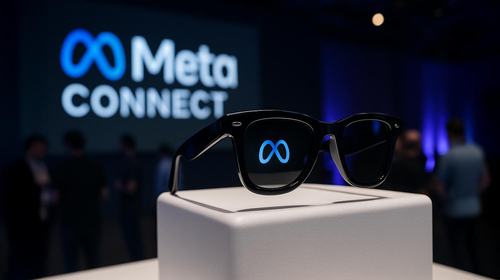
Meta introduced Muse earlier this month as a personal AI agent that can carry out tasks rather than simply answer questions. This week, Meta expanded that strategy at Meta Connect by bringing Muse to its AI glasses and adding new capabilities, including real time video generation. Meta also introduced new AI glasses and audio glasses as part of a wider push towards AI that people can access without opening a traditional computer or phone.
This matters because the competition is shifting from AI assistants that respond to requests towards AI systems that actually complete work.
Muse can send emails, book travel and carry out other tasks on behalf of users. Meta has built a dedicated virtual machine for the agent and says users can control its access to connected services. The system also asks for confirmation before sensitive actions and keeps an audit trail of what it does.
The business opportunity is significant.
Imagine asking an AI assistant to research ten potential suppliers, compare their prices, prepare a shortlist and draft the enquiry emails. The user could then review the work before anything gets sent.
That model could eventually apply to customer service, procurement, sales administration, travel management and internal operations.
The risk grows alongside the opportunity. An AI agent with access to email, payments, documents or customer records can make a much larger mistake than a chatbot that simply gives you the wrong answer.
What to watch next
The next important test will involve trust.
Will people allow agents to perform increasingly sensitive tasks? Will businesses accept them inside customer and financial workflows? And will AI companies create enough controls to make those systems reliable?
For businesses, now is a good time to identify repetitive workflows that require several steps and test whether an AI agent can complete them with human approval.
2. AI is becoming part of the cybersecurity battle
Palo Alto Networks launched Unit 42 Continuous Frontier AI Defense on 22 September. The service uses models from Anthropic and OpenAI alongside open models to continuously test corporate applications, cloud infrastructure and other systems for vulnerabilities. It can also recommend fixes and virtual patches.
Palo Alto says its testing has found that no single AI model identifies more than 40 percent of vulnerabilities in complex environments. Its system therefore uses several models and directs different security tasks to different models.
That approach matters beyond cybersecurity.
It shows that businesses may not need to choose one AI model for everything. They can combine different models based on the job, cost, accuracy and risk.
The security problem has also changed. Attackers increasingly use AI to discover vulnerabilities faster. Defenders therefore need tools that can work at a similar speed.
This creates a growing market for AI security testing, agent security, identity controls and automated monitoring.
For smaller businesses, the practical lesson is straightforward. AI adoption should include security testing from the beginning rather than treating security as something to add later.
What to watch next
Watch for more cybersecurity companies using multiple AI models together.
Also watch how regulators and insurers respond as AI begins to perform more security sensitive tasks. Businesses may soon need to prove that their AI systems have passed specific security tests before they can use them in sensitive environments.
3. AMD joins the trillion dollar AI chip club

AMD reached a US$1 trillion market value this week as investors increased their expectations for AI related demand. Its shares rose sharply on 21 September, putting AMD alongside Nvidia, Broadcom and Micron among major US chip companies valued at more than US$1 trillion.
The important part is not the stock market milestone itself.
AMD has been expanding from individual processors into complete AI computing systems. That includes accelerators, servers and software designed to support large AI workloads.
This gives businesses more options as they build AI infrastructure.
The market has depended heavily on Nvidia, particularly because Nvidia controls a large software and hardware ecosystem. AMD's progress gives cloud providers and other large buyers another major option.
More competition could eventually affect pricing, availability and the range of hardware available to businesses.
It also reinforces another trend.
AI development increasingly depends on physical infrastructure. Companies need chips, data centres, electricity, cooling systems and high speed networks to run advanced AI systems.
What to watch next
Watch AMD's ability to turn growing demand into actual deployments.
Also watch whether businesses begin designing their AI systems to work across several hardware platforms. That would reduce dependence on one supplier and make it easier to move workloads when prices or availability change.
For smaller companies, the immediate opportunity is not buying expensive hardware.
It is building software that can run efficiently across different AI providers and infrastructure platforms.
Africa Overview
4. African businesses are building AI around local problems
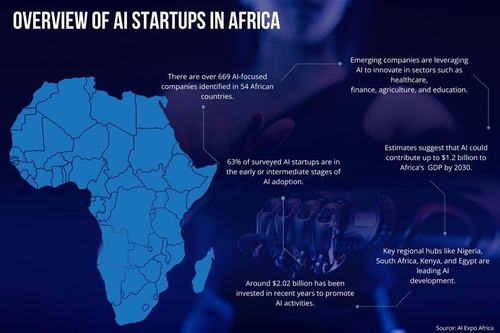
African AI activity is increasingly moving beyond conferences and pilot projects.
One example this week came from Nigeria, where cybersecurity startup Aeon raised US$1 million in pre seed funding. The company is developing security operations technology for organisations that need to monitor increasingly complex digital environments. The funding arrives as AI changes the speed and scale of cyber threats.
Other African startups continue to build AI around specific local problems.
Nigerian company FriendnPal is developing an AI supported behavioural health platform that combines behavioural data, clinical assessments and human clinical review. South Africa's Injini has also launched an AI education venture programme that will support teams building AI tools for African classrooms.
These examples point to an important direction for the continent.
Africa does not need to build a general purpose AI model to participate in the AI economy.
It can build businesses around problems that require local knowledge.
Healthcare is one example. Agriculture is another. Financial services, education, logistics, public services and legal services offer similar opportunities.
The strongest advantage often comes from understanding the customer rather than owning the biggest model.
What to watch next
Watch the number of African companies moving from pilot projects into paying customer relationships.
That will tell us more about the maturity of the market than the number of AI announcements.
There is also a growing opportunity for companies that provide the infrastructure around AI. Data services, cybersecurity, cloud computing, training and implementation support will all become more important as adoption increases.
Kenya Overview
5. Kenya and Anthropic establish a new AI partnership

On 22 September 2026, on the sidelines of the 81st United Nations General Assembly (UNGA) in New York, Kenya and Anthropic signed a Joint Declaration on responsible AI cooperation. The agreement covers AI skills development, research, public-sector applications, safety and evaluation, with potential applications in education and healthcare.
The partnership provides a framework for future pilots, research initiatives and training programmes involving Kenyan institutions. It also requires future programmes involving data to comply with Kenyan law, including data protection and cybersecurity requirements.
The partnership comes at an important point for Kenya.
The country is trying to build more local AI expertise while also deciding how organisations should use increasingly capable AI systems.
The agreement is designed to involve Kenyan institutions in developing and testing applications rather than simply importing finished technology. Future programmes involving government data will also need to comply with Kenyan law and relevant data protection and cybersecurity requirements.
That could create opportunities well beyond government.
Businesses will need people who understand AI, data governance and responsible deployment. Universities and training organisations can develop new programmes. Technology companies can build services around Kenyan institutions and local requirements.
Kenya also signed an agreement with Intel this week to expand AI literacy through public libraries. The programme will work through the Kenya National Library Service and the Mandela AI Hub Foundation.
The government has also been pushing a wider skills agenda. During a Nairobi workshop this week, Principal Secretary Stephen Isaboke said Kenya needs to turn AI investment into productivity, stronger businesses and better public services.
The signing at UNGA highlights Kenya's growing engagement in global AI discussions. The next question is how the partnership will translate into practical programmes, local skills and useful applications for Kenyan institutions and businesses.
What this means for Kenyan businesses
The next phase of AI adoption will need more than people who know how to write prompts.
Businesses need people who can identify useful processes, prepare reliable data, evaluate AI outputs and build controls around sensitive work.
That creates a strong opportunity for Kenyan companies that can help other businesses implement AI properly.
For a company such as Vunoh, this could also influence how future products operate. AI could support customer communication, service-provider coordination, document processing, research and internal operations. But the company would still need clear approval points and records of what the system did.
What to watch next
Watch for the first practical projects that emerge from the Kenya Anthropic agreement.
The important question will not be how many agreements Kenya signs.
It will be what gets built.
The bigger picture
AI is moving beyond generating information towards taking action. From personal AI agents and cybersecurity to African innovation and Kenya’s new partnerships, businesses must focus on where AI adds value, what access it needs and where human oversight remains essential.
What to watch next week
Watch developments in AI agents, cybersecurity, chip competition and African AI adoption. In Kenya, pay attention to whether partnerships with Anthropic and Intel lead to practical programmes, products and skills.
The key takeaway for businesses is simple. Start with a real problem, then decide where AI fits.